
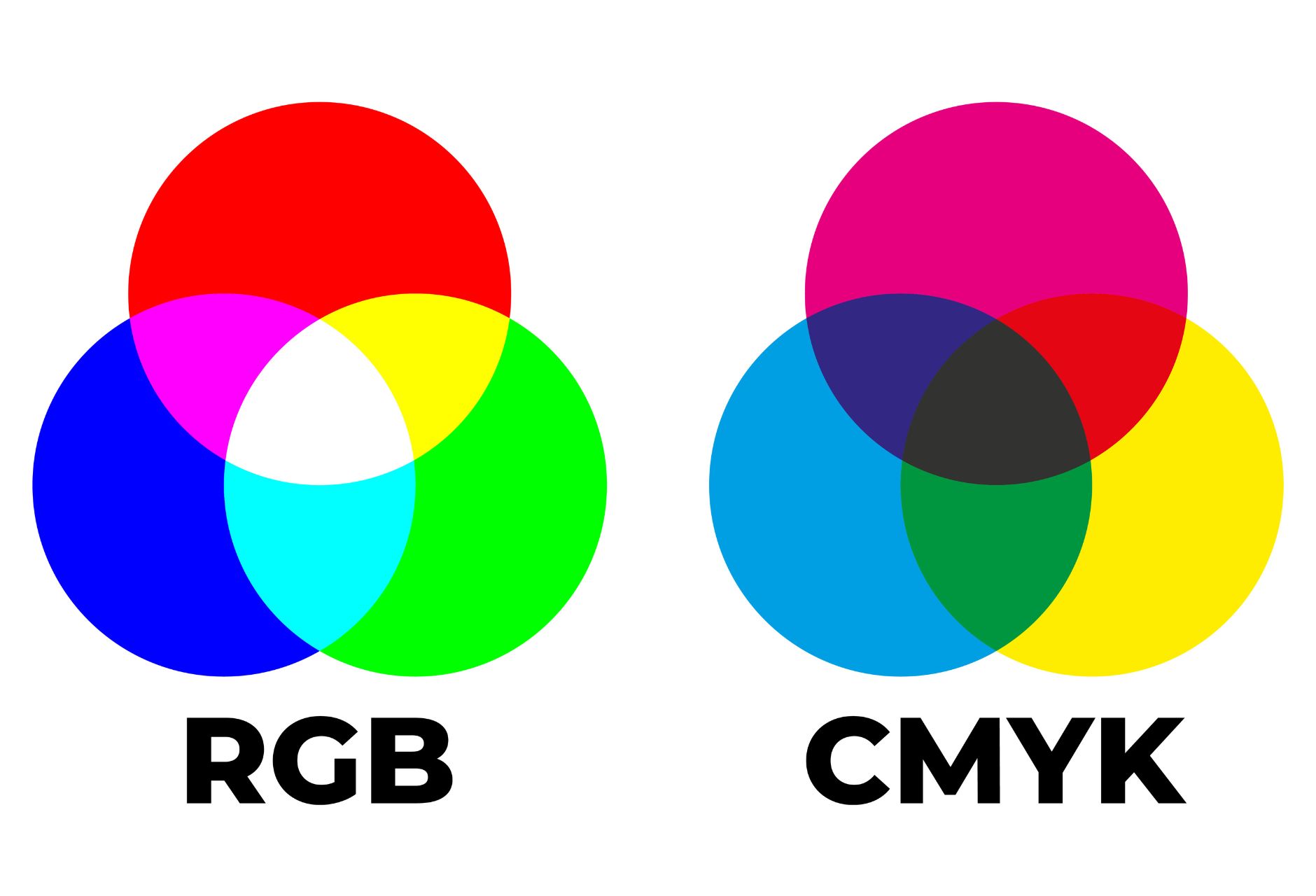
CMYK vs RGB Explained: Which Colour Mode Should You Use for Printing?
Introduction
Understanding CMYK vs RGB is essential before you design artwork for printing or digital use. Choosing the wrong colour mode can lead to unexpected colour differences, lower print quality, and costly reprints. Therefore, every business, designer, and marketer should know when to use CMYK and when RGB is the better choice.
At BUP Group, we help businesses produce high-quality printed materials by checking artwork before production. In this guide, we’ll explain the differences between CMYK and RGB, their applications, and how to choose the right colour mode for your project.
What Is RGB?
RGB stands for Red, Green, and Blue. It is the colour model used for digital screens, including computers, smartphones, televisions, and tablets.
RGB creates colours by combining light. As more light is added, the colours become brighter. Because of this, RGB offers a wider colour range and produces more vibrant visuals on screens.
RGB is commonly used for:
- Websites
- Social media graphics
- Mobile applications
- Digital advertisements
- Presentation slides
- Videos
If your design will only appear on a screen, RGB is usually the best option.
What Is CMYK?
CMYK stands for Cyan, Magenta, Yellow, and Key (Black). Commercial printers use this colour model because it reproduces colours with ink instead of light.
Unlike RGB, CMYK mixes inks to create the final printed image. Therefore, some bright colours displayed on a monitor may appear slightly different after printing.
CMYK is the preferred colour mode for:
- Business cards
- Flyers
- Brochures
- Posters
- Catalogues
- Packaging
- POSM displays
- Large-format printing
- Exhibition graphics
Using CMYK before printing helps reduce colour variations and improves print accuracy.
CMYK vs RGB: What’s the Difference?
Although both colour modes produce attractive visuals, they serve different purposes.
| Feature | RGB | CMYK |
|---|---|---|
| Colour Source | Light | Ink |
| Best For | Digital screens | Printed materials |
| Colour Range | Wider | Smaller |
| Brightness | More vibrant | More accurate for print |
| Common Uses | Websites, videos, social media | Flyers, packaging, posters |
As a result, choosing the correct colour mode depends on where your design will be used.
 Why Do Printed Colours Look Different?
Many people wonder why printed materials sometimes look different from the artwork on their computer.
The answer is simple. Computer screens display colours using light, while printers reproduce colours using ink. Consequently, some bright RGB colours cannot be replicated exactly in CMYK.
In addition, monitor brightness, screen calibration, and paper type can affect the final appearance of printed colours.
For this reason, professional printing companies recommend designing artwork in CMYK whenever possible.
When Should You Use RGB?
RGB works best for digital projects because screens display colours more accurately in this format.
Choose RGB for:
- Facebook and Instagram posts
- TikTok content
- Website banners
- Digital presentations
- Online advertisements
- Email marketing graphics
Furthermore, RGB files often provide brighter colours for online viewing.
When Should You Use CMYK?
CMYK is the industry standard for commercial printing.
Use CMYK for:
- Brochures
- Flyers
- Posters
- Roll-up banners
- Stickers
- Packaging
- Retail Display & POSM
- Exhibition displays
- Signage and large-format printing
Therefore, converting your artwork to CMYK before production helps minimise colour surprises.
Tips Before Sending Artwork for Printing
Preparing your artwork correctly can save both time and money.
Before submitting your files:
- Set the colour mode to CMYK.
- Use high-resolution images (300 DPI).
- Embed or outline fonts.
- Include bleed and safety margins.
- Save files as PDF or AI whenever possible.
Moreover, always review a digital proof before approving production.
Why Choose BUP Group?
At BUP Group, we don’t just print your artwork—we help ensure it prints correctly.
As a direct factory with in-house production facilities, we review artwork before printing and recommend adjustments when necessary. Because clients work directly with our experienced production team, communication is faster and quality remains consistent throughout the project.
Whether you need brochures, packaging, exhibition displays, POSM, or large-format signage, we help you select the right materials, colour settings, and printing method for the best results.
Conclusion
Understanding CMYK vs RGB helps businesses avoid printing mistakes and achieve consistent brand colours. RGB delivers vibrant visuals for digital platforms, while CMYK produces reliable and accurate printed materials.
If you are unsure which colour mode to use, BUP Group is ready to help. Our experienced team provides professional advice, artwork checking, and high-quality printing solutions to ensure your project looks exactly as intended.